About
디지털 화폐는 본래 신호가 끊겼다고 해서 멈춰서도록 설계되지 않았습니다. 하지만 지난 수년간 암호화폐 사용은 '영구적인 연결'이라는 취약한 가정에 매몰되어 있었습니다. 실제 상황에서 이 가정은 자주 깨지곤 합니다. 네트워크는 정체되고, 통신 범위는 사라지며, 수수료(Gas fee)는 예고 없이 치솟습니다. 이런 상황이 발생하면, 가치는 정작 가장 필요한 순간에 사용할 수 없는 상태가 됩니다.
핫 월렛(Hot Wallet)이 주류가 된 이유는 편리함 때문이었습니다. 언제나 연결되어 있고, 동기화되어 있으며, 즉시 전송할 준비가 되어 있죠. 하지만 이러한 '지속적인 노출'은 그에 따른 비용을 드러냈습니다. 모든 거래는 실시간 네트워크에 의존해야만 하며, 자산은 인터넷에 반복적으로 접촉해야 하는 키(Key)를 통해 온체인상에 그대로 노출되어 있습니다.
최근 이러한 자산 보유 방식에 의문을 던지는 새로운 모델이 조용히 형성되고 있습니다. 이 모델은 오랫동안 모호하게 섞여 있던 두 가지 개념, 즉 '가치를 저장하는 방법'과 '가치를 이동시키는 방법'을 분리함으로써 혁신을 꾀합니다.
'오프라인 월렛'이라는 용어는 종종 오해를 받곤 합니다. 엄밀히 말하면, 이는 저장 보안과는 무관한 '거래 메커니즘'에 가깝습니다.
오프라인 월렛을 사용하면 디지털 자산을 '오프라인 토큰(Offline Tokens)'으로 변환할 수 있습니다. 이는 암호학적으로 서명된 가치 단위로, 네트워크 연결이나 가스비 없이도 기기 간 전송이 가능합니다. 토큰은 블루투스나 QR 코드와 같은 로컬 통신 수단을 통해 사용자 간에 직접 이동합니다. 블록체인 네트워크에 아직 도달하지 않았음에도 소유권 변환은 그 즉시 이루어집니다.
블록체인은 그 이후에 등장합니다. 연결이 복구되면 완료된 오프라인 거래가 온체인에서 최종 확정(Settlement)됩니다. 네트워크는 사전에 거래를 승인하는 것이 아니라, 이미 발생한 일을 기록하는 역할을 수행합니다. 거래와 결제의 이러한 분리는 결제라는 핵심 경로에서 인터넷이라는 필수 조건을 제거해 줍니다.
결국 오프라인 월렛은 '이동성'에 관한 것입니다. 네트워크가 불안정하거나 비싸고, 혹은 아예 사용할 수 없는 환경에서도 결제 문제를 해결해 줍니다. 다만, 거래 사이의 자산을 얼마나 안전하게 보관하느냐는 별개의 문제입니다.
콜드 월렛은 전혀 다른 문제, 즉 '보관 방식'에 집중합니다.
전통적인 의미의 콜드 월렛은 개인 키(Private Key)를 하드웨어 기기나 종이 등에 오프라인으로 보관하는 것을 의미하며, 자산 자체는 여전히 블록체인상에 존재합니다. 즉, 블록체인이 가치를 보유하고 월렛은 단지 접근 권한만을 통제할 뿐입니다. 만약 키가 탈취된다면 자산은 원격으로 인출될 수 있습니다.
하지만 콜드 스토리지에 대한 보다 진보된 해석은 이 구조 자체를 바꿉니다. 개인 키뿐만 아니라 자산 자체를 '오프라인 토큰' 형태로 사용자 모바일 기기 내의 격리된 보안 환경에 보관하는 방식입니다. 이 구성에서 자산은 실시간 블록체인 네트워크에 존재하지 않습니다. 결과적으로 네트워크 기반의 공격 경로가 획기적으로 차단됩니다.
이러한 콜드 월렛 환경은 추가적인 암호화 계층과 격리된 처리 로직을 도입하며 외부 접근을 엄격히 제한합니다. 동일한 기기 내의 다른 앱조차 저장된 자산과 상호작용할 수 없습니다. 보안이 '자산 수준'에서 작동하는 것입니다.
이 차이는 매우 중요합니다. 오프라인 월렛은 네트워크 없이 가치를 이동시키고, 콜드 월렛은 네트워크로부터 가치를 보호합니다. 이 둘은 서로 다른 문제를 해결하며, 올바르게 결합되었을 때 서로의 장점을 극대화합니다.
새로운 시스템들이 기존과 차별화되는 점은 오프라인 거래와 콜드 스토리지를 각자의 역할을 혼동하지 않으면서도 통합해냈다는 점입니다.
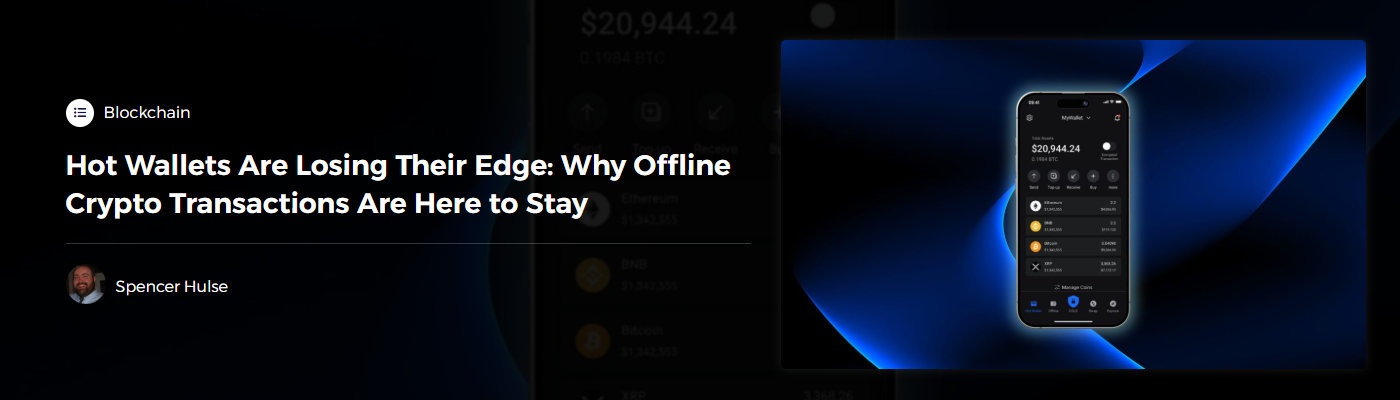
대표적인 예로 퓨어월렛(PureWallet)을 들 수 있습니다. 퓨어월렛은 결제를 위해 오프라인 토큰을 사용하면서 동시에 이 토큰들을 모바일 기기 내의 강력한 콜드 월렛 환경에 보관할 수 있도록 설계되었습니다. 자산이 물리적으로 사용자의 기기에 거주하게 되는 셈입니다.
이는 중대한 결과를 가져옵니다. 설령 개인 키가 노출되더라도, 해당 기기를 물리적으로 소유하지 않고서는 자산에 접근할 수 없습니다. 도난의 문제가 '원격 해킹'에서 '물리적 탈취'의 영역으로 전환되는 것입니다. 이는 기존의 핫 월렛이나 콜드 월렛과는 근본적으로 다른 보안 태세입니다.
오프라인 월렛은 빠르고 로컬 중심적이며 가스비가 없는 '결제 행위'를 담당합니다. 콜드 월렛은 네트워크로부터 격리되고 암호화되어 접근 불가능한 '수탁(Custody)'을 관장합니다. 이 둘이 결합되어 가치가 지속적으로 노출되지 않으면서도 자유롭게 흐를 수 있는 구조가 완성됩니다.
핫 월렛은 실시간 저장과 실시간 거래를 하나의 '항상 연결된' 시스템으로 통합했습니다. 이는 실험정신이 탄력성(Resilience)보다 중요했던 초기 단계에는 합당한 설계였습니다. 그러나 오늘날 이 방식은 점점 더 큰 리스크로 다가오고 있습니다.
오프라인 거래는 네트워크 조건에 대한 의존성을 제거합니다. 자산 수준의 콜드 스토리지는 네트워크 보안에 대한 의존성을 제거합니다. 두 기술의 결합은 네트워크 정체에 따른 지연, 수수료 변동성, 원격 해킹, 그리고 대규모 키 탈취와 같은 위험 요소들을 원천적으로 차단합니다.
물론 핫 월렛이 하루아침에 사라지지는 않을 것입니다. 트레이딩이나 온체인 상호작용, 안정적인 연결이 보장된 환경에서는 여전히 유용합니다. 하지만 디지털 결제가 인프라가 완벽하지 않은 일상의 영역으로 확장됨에 따라, '항상 온라인'이어야 한다는 모델은 현실과 괴리되기 시작했습니다.
자산을 '어떻게 보관하는가'와 '어떻게 사용하는가'를 명확히 구분하는 시스템은 더욱 견고한 블록체인 활용의 미래를 제시합니다. 이는 끊임없는 노출보다 신뢰성을, 지속적인 연결보다 통제권을 우선시하는 진정한 가치 중심의 기술입니다.
Digital money was never meant to stall when a signal drops, but for years, crypto usage has remained tethered to a fragile assumption: permanent connectivity. In practice, that assumption breaks often. Networks clog. Coverage disappears. Fees spike without warning. When that happens, value becomes inaccessible precisely when it’s needed most.
Hot wallets rose to dominance because they were convenient. Always connected, always synchronized, always ready to broadcast. But that constant exposure has revealed its cost. Transactions depend on live networks. Assets sit directly on-chain, waiting to be accessed through keys that must repeatedly touch the internet.
A different model has been forming quietly, one that challenges how assets themselves are held. It does this by separating two ideas that have long been blurred together: how value is stored and how value moves.
The term “offline wallet” is often misunderstood. In its purest sense, it has nothing to do with storage security. It is a transaction mechanism.
An Offline Wallet allows digital assets to be converted into Offline Tokens, cryptographically signed units of value that can be transferred between devices without any network connection and without gas fees. These tokens move directly from one user to another using local communication methods such as Bluetooth or QR codes. Ownership changes immediately, even though the blockchain has not yet been contacted.
The blockchain enters the picture later. Once connectivity is restored, the completed offline exchange is finalized on-chain. The network records what has already occurred, rather than authorizing it in advance. This separation between exchange and settlement removes the internet from the critical path of payment.
Offline wallets, then, are about movement. They solve the problem of paying when networks are unreliable, expensive, or unavailable. They do not, by themselves, address how securely assets are held between transactions.
Cold wallets solve a different problem entirely. They focus on how assets are stored.
Traditionally, a cold wallet means private keys are kept offline, often on hardware devices or paper, while the assets themselves remain on the blockchain. The blockchain still holds value. The wallet merely controls access. If a key is compromised, the assets can be drained remotely.
A more advanced interpretation of cold storage changes that structure. Instead of storing only private keys offline, the assets themselves are held off-chain as Offline Tokens inside a secure, segregated environment on the user’s mobile device. In this configuration, assets are not sitting on a live blockchain network at all. As a result, network-based attack vectors are significantly reduced.
These Cold Wallet environments introduce additional encryption layers and isolated processing logic, with tightly restricted external access. Even other applications on the same device cannot interact with the stored assets. Security operates at the asset level.
This distinction matters. Offline wallets move value without networks. Cold wallets protect value from networks. They solve separate problems—and when combined correctly, they reinforce one another.
What sets certain newer systems apart is that they integrate offline transactions and cold storage without conflating their roles.
One example is PureWallet, which uses Offline Tokens for payments while also allowing those tokens to be stored in a hardened Cold Wallet environment on the mobile device. In this design, assets reside physically on the user’s device.
This has an important consequence. Even if a private key were somehow exposed, the assets themselves cannot be accessed without physical possession of the device. Theft becomes a physical problem rather than a remote one. That is a fundamentally different security posture from conventional wallets, hot or cold.
The Offline Wallet handles the act of payment: fast, local, and gas-free. The Cold Wallet governs custody, isolated, encrypted, and inaccessible from the network. Together, they form a structure where value can move freely without being continuously exposed.
Hot wallets combine live storage and live transactions into a single always-connected system. That design made sense when experimentation mattered more than resilience. Today, it increasingly looks like a liability.
Offline transactions remove dependency on network conditions. Cold storage at the asset level removes dependency on network security. Together, they eliminate entire categories of risk: congestion delays, fee volatility, remote exploits, and mass key compromise.
This does not mean hot wallets disappear overnight. They remain useful for trading, on-chain interactions, and environments where constant connectivity is guaranteed. But as everyday digital payments expand into places where infrastructure is imperfect, the always-online model begins to feel out of step with reality.
Systems that distinguish clearly between how assets are stored and how they are spent point toward a more grounded form of blockchain use, one that values reliability over exposure, and control over constant connection.